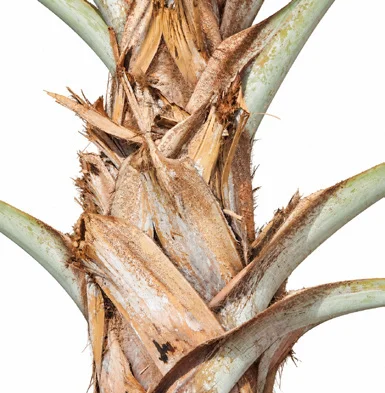
Bark
Trunk single, grey to tan, slightly swollen at the base, ringed with old leaf scars; young plants retain split old leaf bases in a criss-cross pattern.


Syn. Medemia nobilis
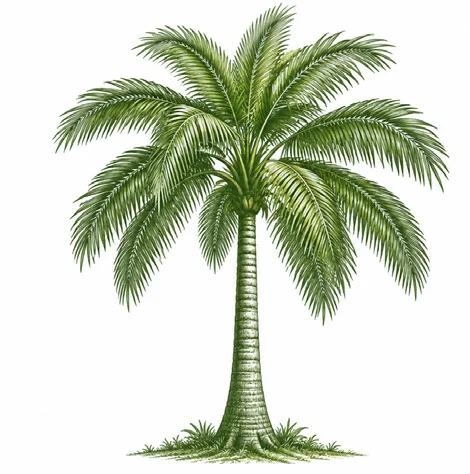
Trunk single, grey to tan, slightly swollen at the base, ringed with old leaf scars; young plants retain split old leaf bases in a criss-cross pattern.
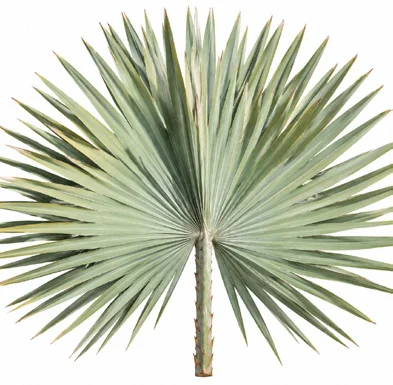
Leaves are very large, stiff, fan-shaped (costapalmate), up to 3 m across, usually silvery blue-grey with a waxy bloom (a green form also exists); leaf stalks edged with small sharp teeth.
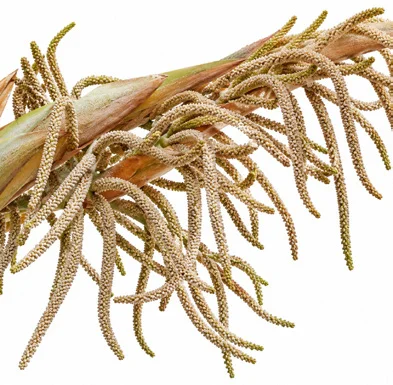
Dioecious: male and female flowers on separate plants. Flowers small, brownish to cream, on pendulous inflorescences among the leaves.
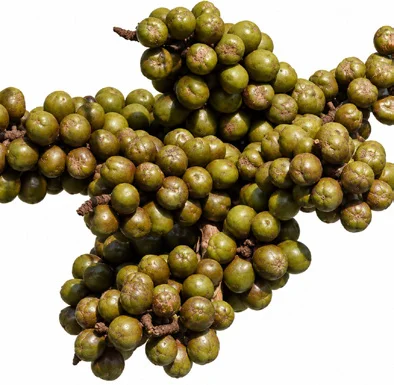
Female plants bear clusters of ovoid, brown drupes, about 3–4 cm in diameter, each with one seed.
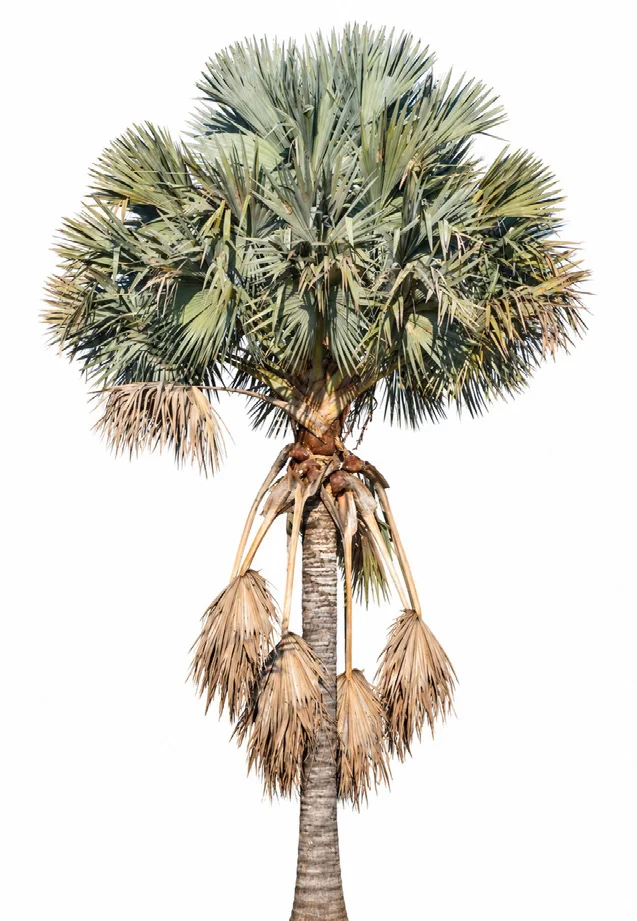
The genus is named after Otto von Bismarck, the first Chancellor of the German Empire, and has only this one species. Its silvery colour comes from a wax coating on the leaves. In Madagascar its pith is sometimes eaten and its wood is used as timber.

N. & W. Madagascar, Comoros.