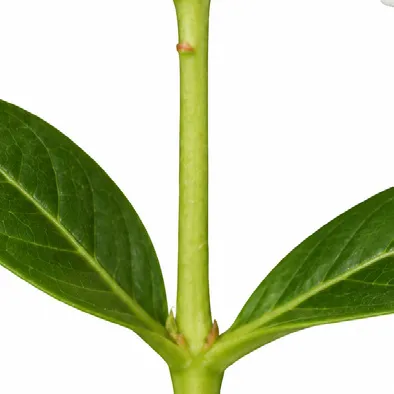
Bark
Pale grey, smooth, lenticelled bark on an unbranched or sparingly branched semi-woody stem that bleeds a thin milky latex when cut.


Syn. Ophioxylon serpentinum
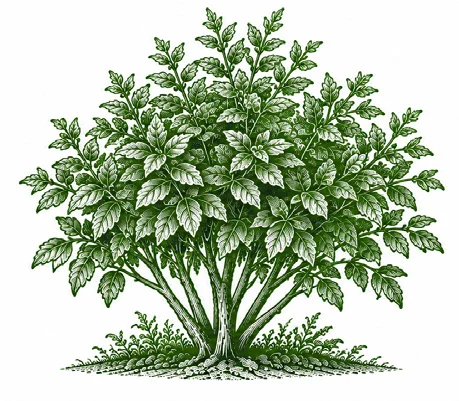
Pale grey, smooth, lenticelled bark on an unbranched or sparingly branched semi-woody stem that bleeds a thin milky latex when cut.
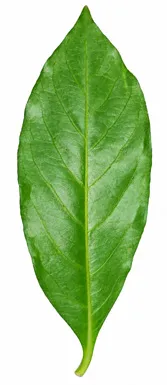
Pale grey, smooth, lenticelled bark on an unbranched or sparingly branched semi-woody stem that bleeds a thin milky latex when cut.
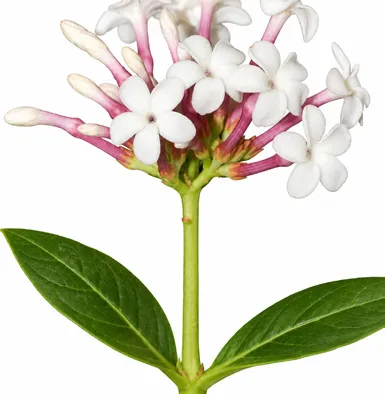
Small, tubular flowers (~1.5 cm long) featuring a bright pinkish-red calyx tube topped with 5 spreading, pure white petals, arranged in dense terminal clusters.
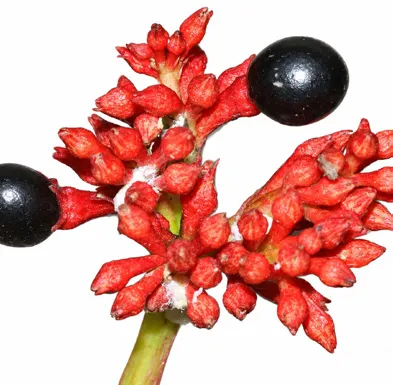
Small, round, fleshy drupes (~6 mm) growing in pairs, transitioning from green to a striking glossy purplish-black when fully ripe, holding a single hard seed.
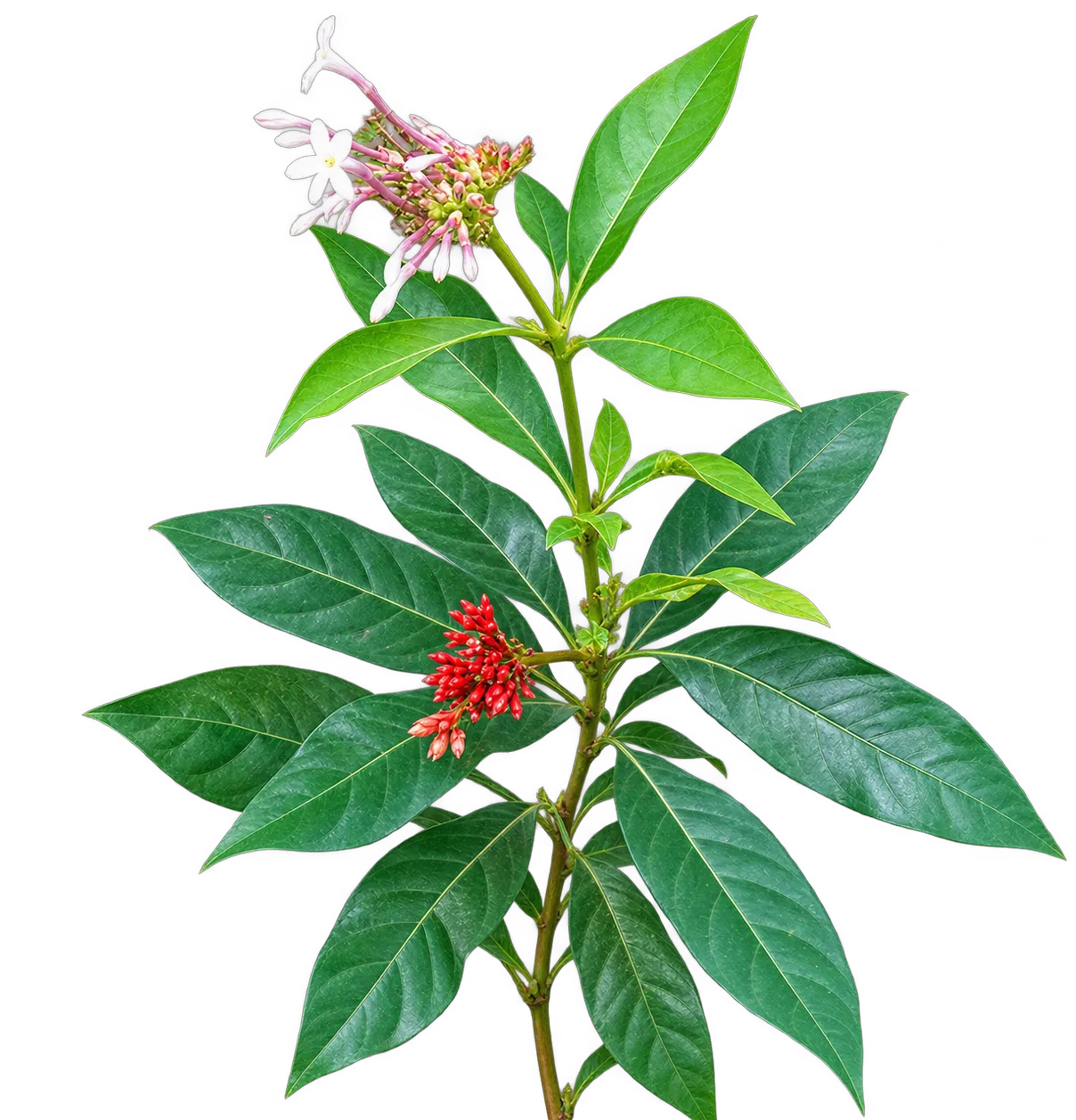
It has long been valued in traditional medicine for its calming properties. Its snake-like roots inspired its name, while folklore claims that mongooses chew the plant before fighting cobras, associating it with protection against snakebites.

Indian Subcontinent to China, W. Malesia, Hainan, Marianas