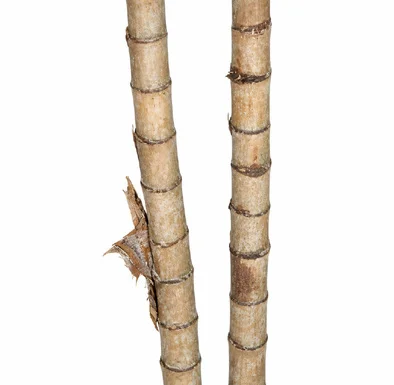
Bark
Stems slender, woody, ringed; old leaf sheaths persist on the stem after the leaf stalk breaks off, hiding the crownshaft.

Syn. Ptychosperma singaporense
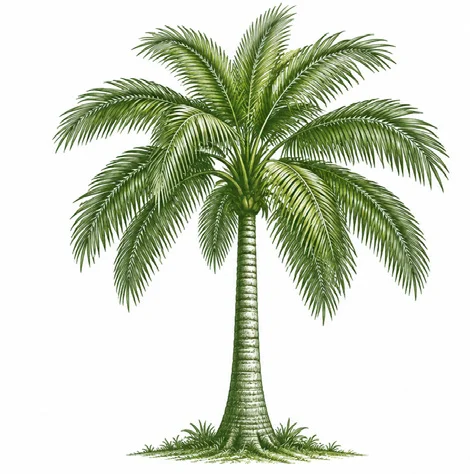
Stems slender, woody, ringed; old leaf sheaths persist on the stem after the leaf stalk breaks off, hiding the crownshaft.
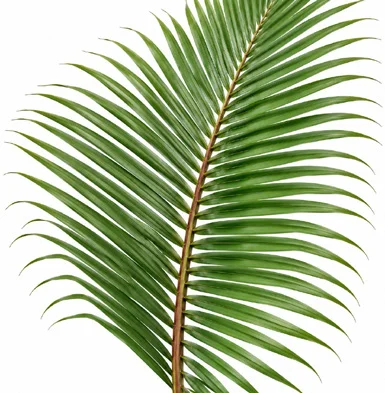
Leaves are pinnately compound, smooth, green, with leaflets in two rows along the rachis; leaf stalk up to about 70 cm long.
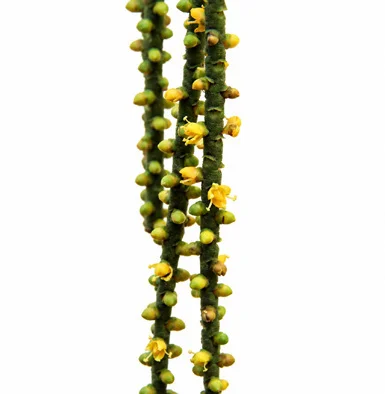
Inflorescences 20–35 cm long, arising below the crown from among the old leaf sheaths. Flowers small, orange to yellowish.
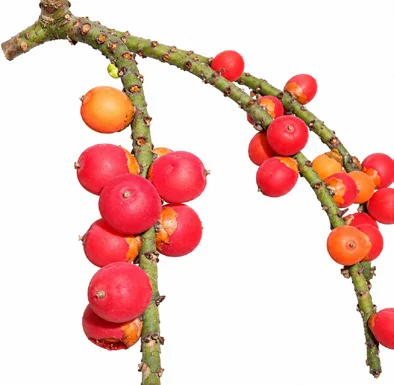
Fruits small, smooth, about 1–1.2 cm long, ripening yellowish-orange to red; one seed per fruit.
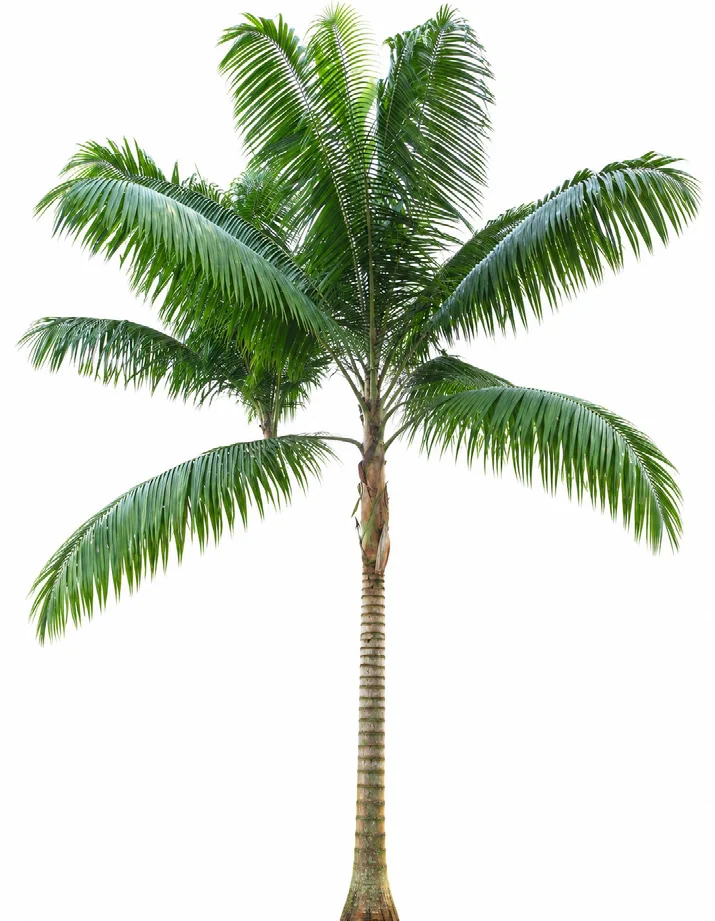
It is the only species of the genus Rhopaloblaste with clustering stems. Its straight, slender stems are traditionally used to make walking sticks and handles, and the fruits are edible. Though globally listed as Lower Risk, it is Critically Endangered within Singapore.

Peninsula Malaysia.