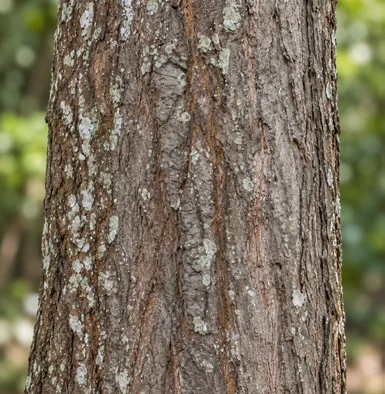
Bark
The bark of the young tree is smooth with a few long deep and vertical furrows.

Syn. Dryobalanops robusta
The bark of the young tree is smooth with a few long deep and vertical furrows.
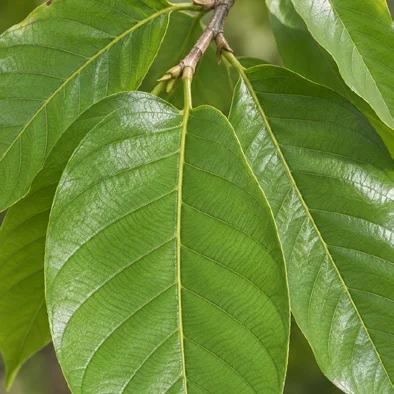
The leaves are ovate-oblong, 10–25 cm long and 5–15 cm broad. In wetter areas, it is evergreen; in drier areas, shedding most of the leaves between February and April, leafing out again in April and May.
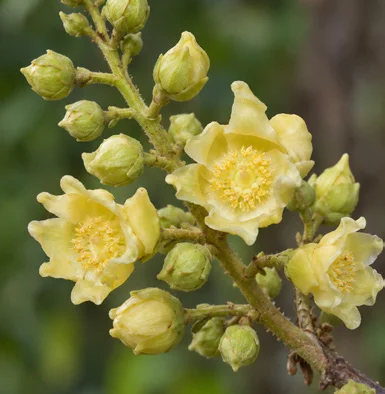
Flowers, whitish in colour, appear in early summer. These are borne in raceme-like panicles in leaf axils, covered with white pubescence.
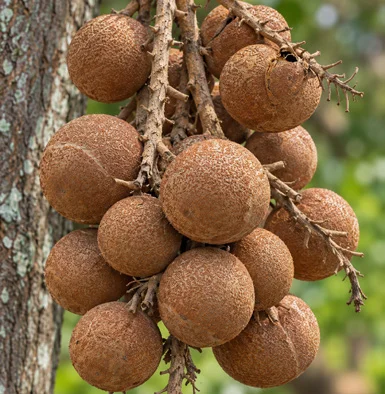
Fruit is a nut enclosed by the persistent calyx, with five wings (three long and two short) that aid wind dispersal.
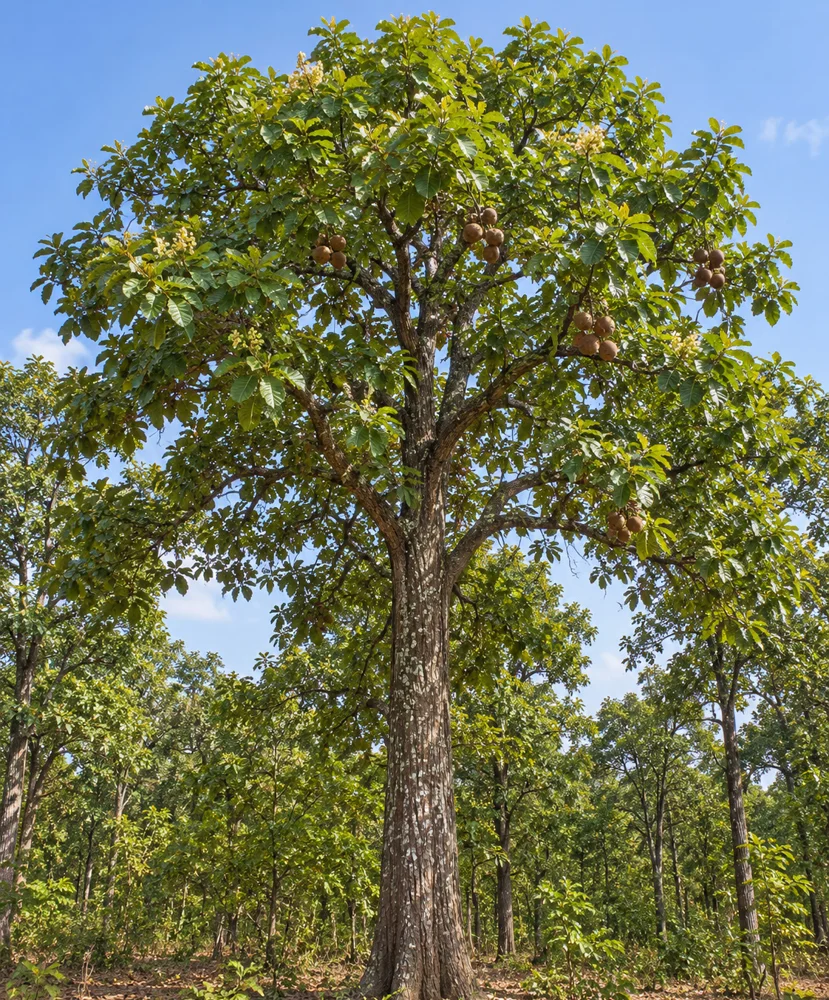
Sal is one of India’s most economically and ecologically important timber species, forming extensive Sal forests across northern and central India.

Indian Subcontinent to South East Tibet