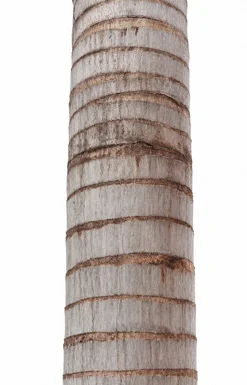
Bark
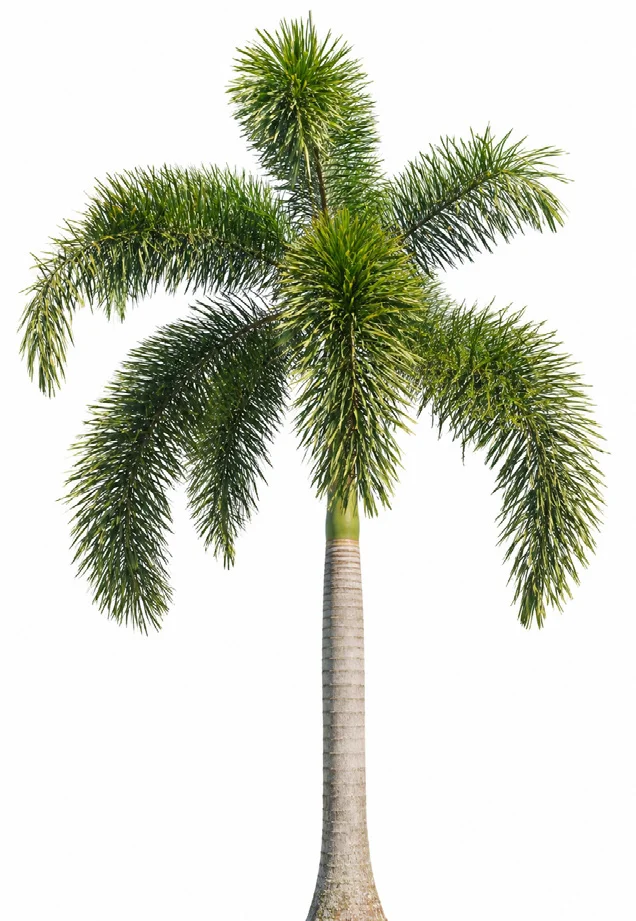
Trunk smooth, unarmed, light grey to nearly white, closely ringed with leaf scars; columnar to slightly bottle- or spindle-shaped. Topped by a smooth, pale green to blue-green crownshaft.


Syn. -
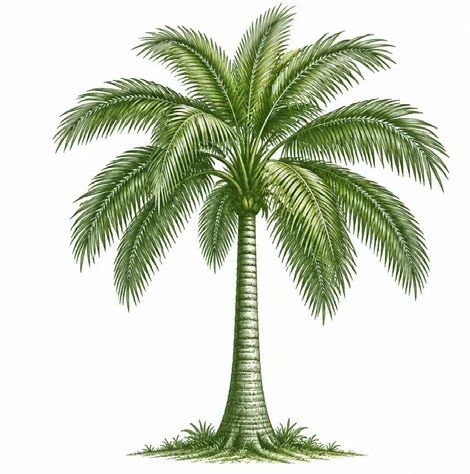
Trunk smooth, unarmed, light grey to nearly white, closely ringed with leaf scars; columnar to slightly bottle- or spindle-shaped. Topped by a smooth, pale green to blue-green crownshaft.
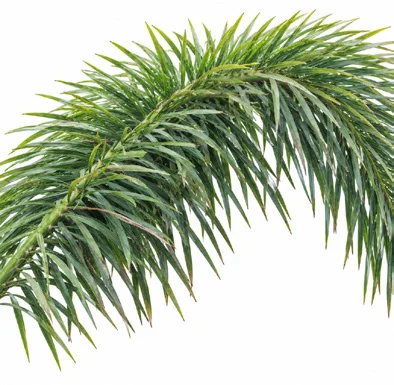
Leaves are pinnately compound, arching, up to about 3 m long. Leaflets are split into many segments and radiate from the midrib in all directions, giving the frond a bushy, fox-tail or bottle-brush look.
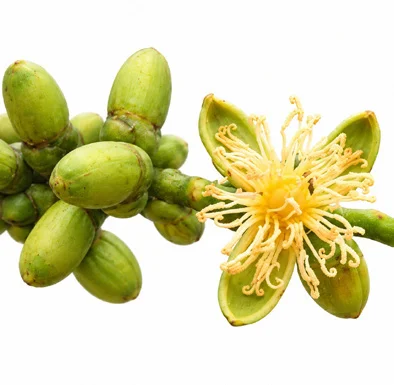
Inflorescence a much-branched panicle arising from the base of the crownshaft. Flowers small, creamy-white to yellowish-green, unisexual (male and female on the same plant), borne in groups of three (one female between two males).
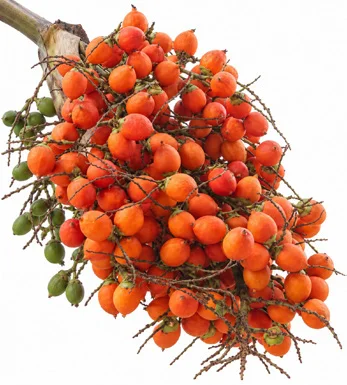
Fruits are ovoid drupes, about 5–6.5 cm long, borne in heavy clusters; green when young, ripening to bright orange-red.
The genus is named after Wodyeti, an Aboriginal man regarded as the last person with traditional knowledge of the plants of the Cape Melville area; “bifurcata” (twice-forked) refers to the split leaflets and the forked seed fibres. After its description in 1983, demand for seeds led to illegal collection from the wild.

N. Queensland (Melville Range), El Salvador.