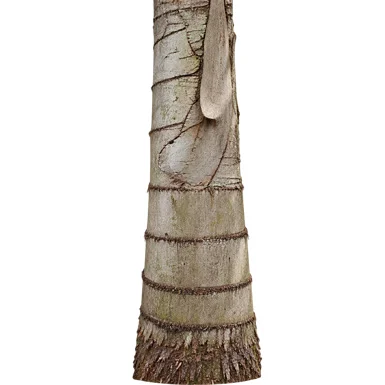
Bark
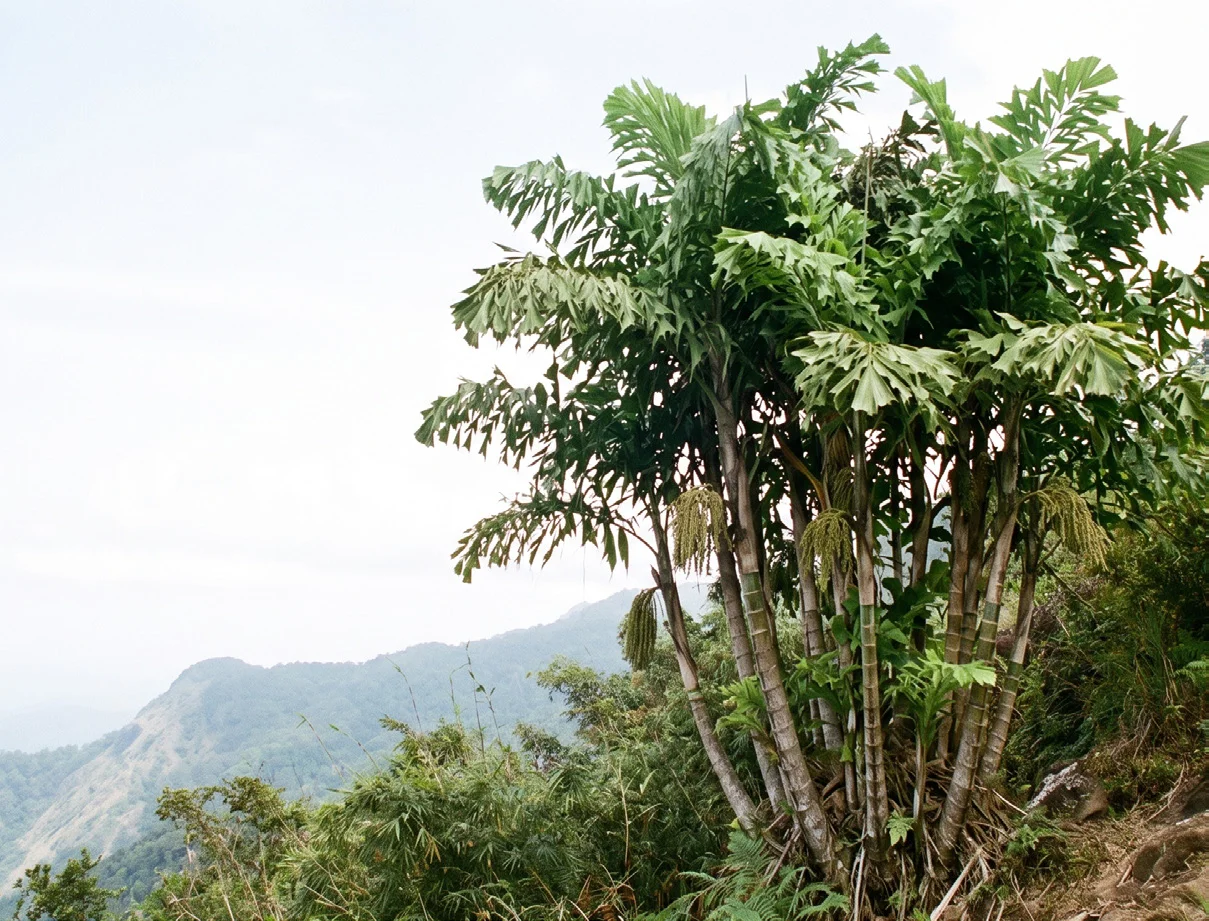
Trunk solitary, erect, stout and smooth, greyish, with prominent annular leaf scars. Each stem dies after fruiting.


Syn. Caryota aequatorialis
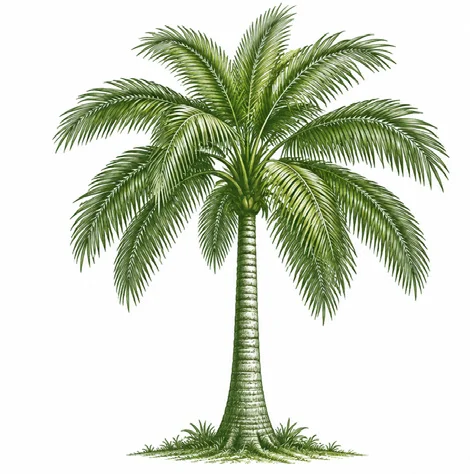
Trunk solitary, erect, stout and smooth, greyish, with prominent annular leaf scars. Each stem dies after fruiting.
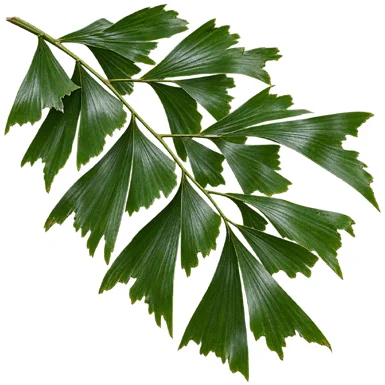
Bipinnate, 4–6 m long, with broad, wedge-shaped, irregularly cut leaflets and distinctive flat, truncated, fish-tail-like tips.
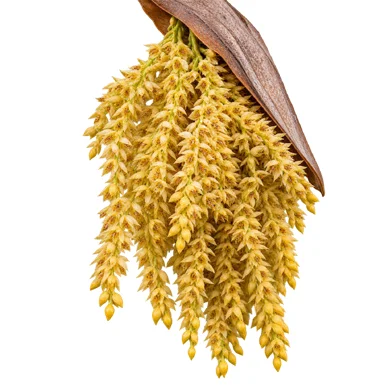
Large, pendulous, highly branched inflorescences up to 4 m long; monoecious, bearing flowers in triads, with one central female flower flanked by two male flowers.
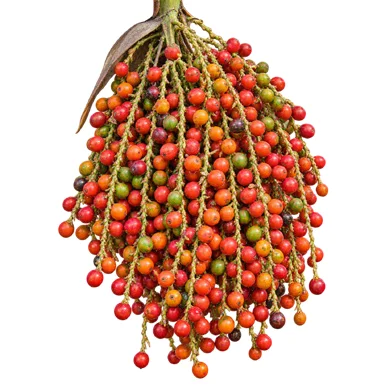
Fruits globose, about 2 cm across, reddish-purple when ripe, containing plano-convex to subreniform seeds and irritating calcium oxalate crystals.
In Gujarati, it is locally known as “Shivjata”, a name inspired by the plant’s hair-like structures resembling the matted hair (jata) of Lord Shiva.

S. India, Sri Lanka, S. Bhutan to S. China, W. & Central Jawa, Andaman Is., Cuba