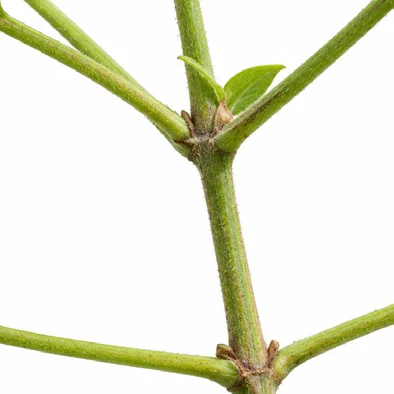
Bark
Smooth, greenish-gray to light brown bark with square-shaped (quadrangular) young stems covered in fine, soft hairs.


Syn. Clerodendrum fragrans
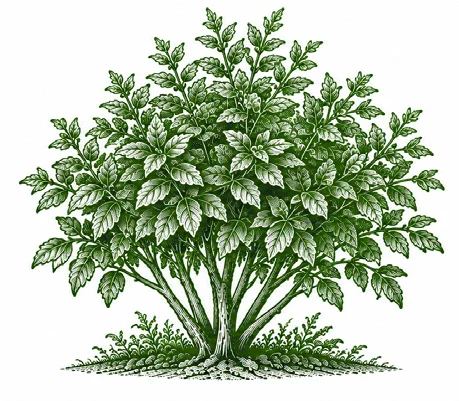
Smooth, greenish-gray to light brown bark with square-shaped (quadrangular) young stems covered in fine, soft hairs.
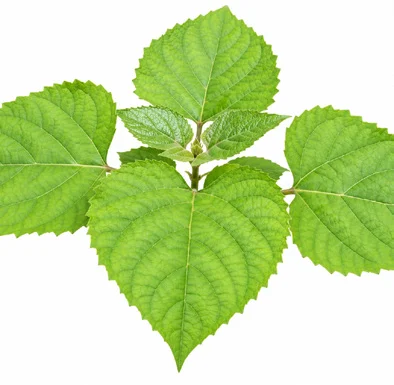
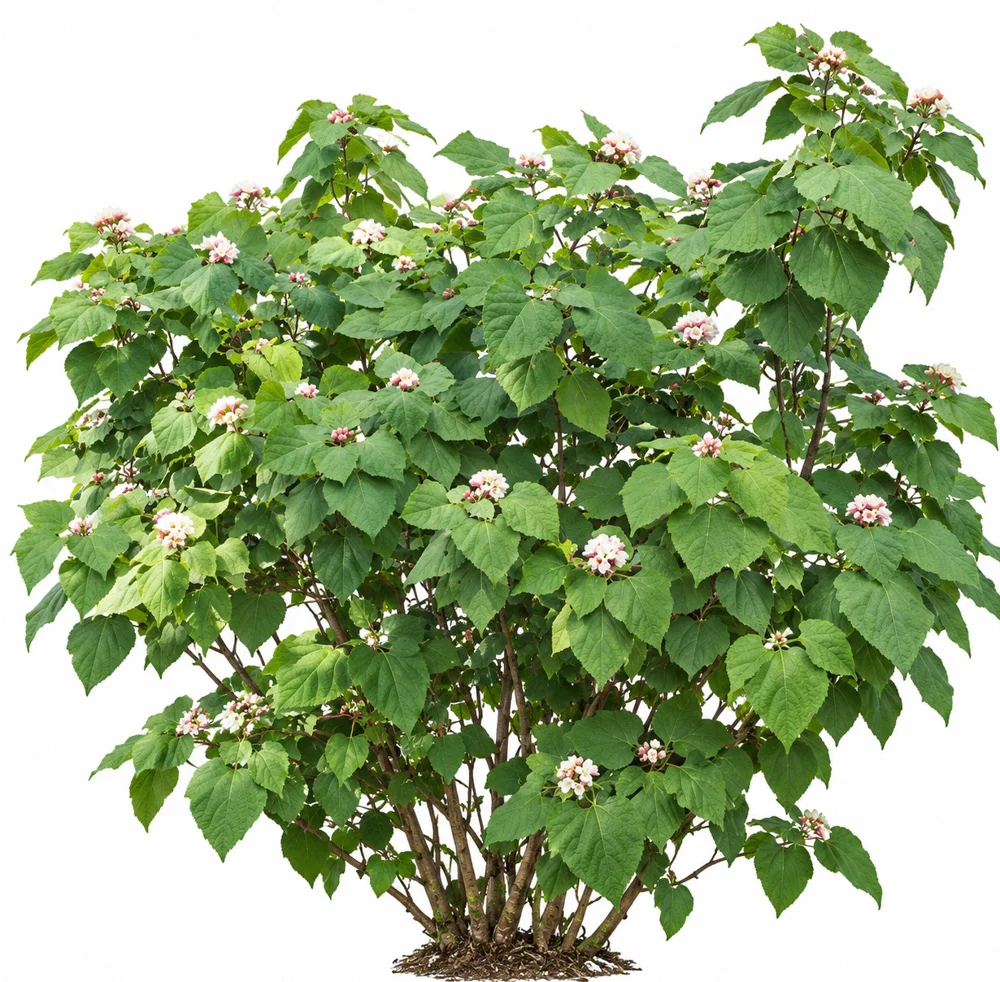
Large, broadly ovate leaves (10–25 cm long) with deeply toothed margins, emitting a strong, fetid odor when crushed.
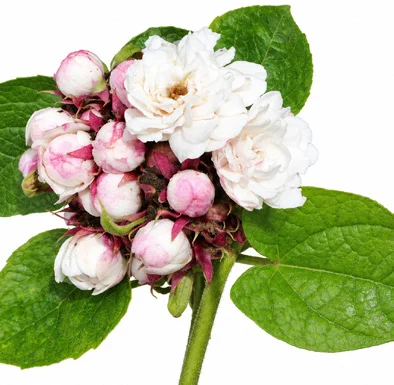
Fragrant, double pinkish-white flowers resembling miniature roses, densely packed into large, dome-shaped terminal clusters.
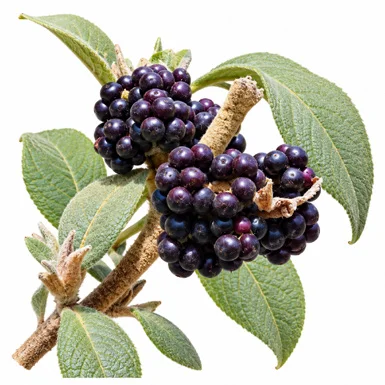
Rarely produces fruit; when present, it forms small, blue-black drupes holding four seeds.
The name Clerodendrum derives from Greek kleros (fate) and dendron (tree), traditionally linked to the variable medicinal properties of its species.

Himalaya to S. China and Malesia, Taiwan, Tanzania, Bangladesh