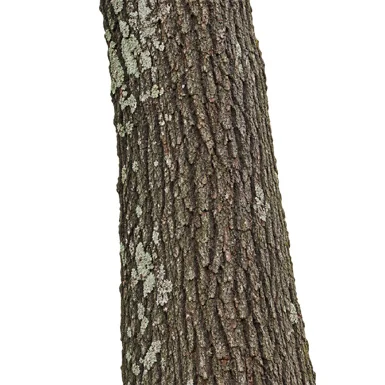
Bark
Thin, rough, reddish-brown to ash-coloured, often with depressed or wart-like lenticels; inner bark yellowish.


Syn. Trichilia connaroides
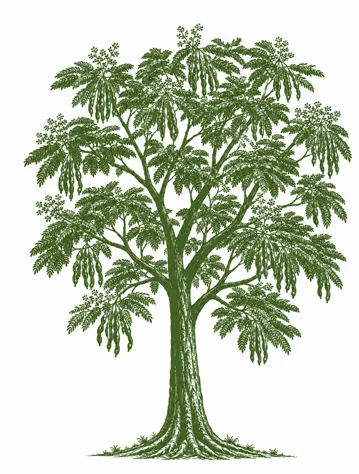
Thin, rough, reddish-brown to ash-coloured, often with depressed or wart-like lenticels; inner bark yellowish.
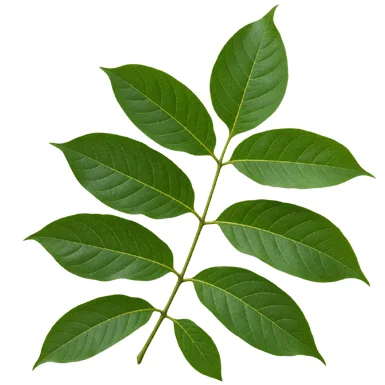
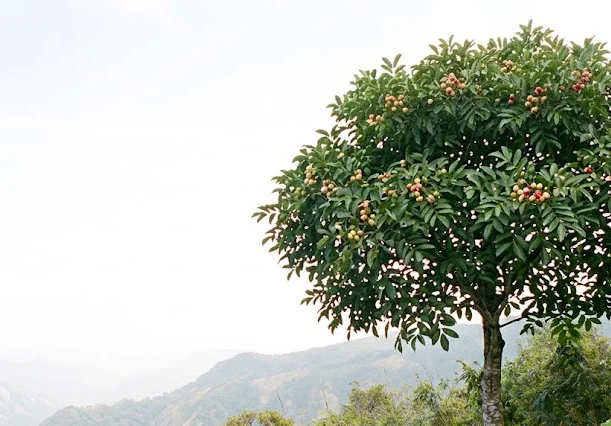
Leaves are compound, 10-38 cm long, with opposite leaflets, 4 pairs, 5-15 cm long, pale and often softly velvety beneath.
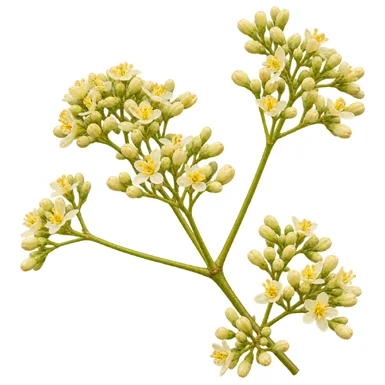
Small, white, bisexual, arranged in axillary panicles; peduncles leaf-length; calyx 4–5-lobed, petals 4–5, staminal tube 8–10-lobed, ovary 2–3-celled, with two ovules per cell.
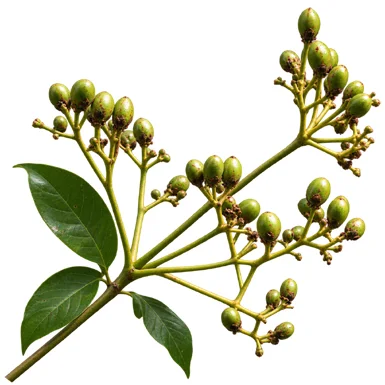
Capsules 1.2–1.6 cm in diameter, with two broad, obtuse valves; seeds bear a thin, white, fleshy aril and orange coats that turn brown with maturity.
Leaf decoctions were historically used for cholera and related gastrointestinal ailments in Peninsular Malaysia and northern Vietnam.
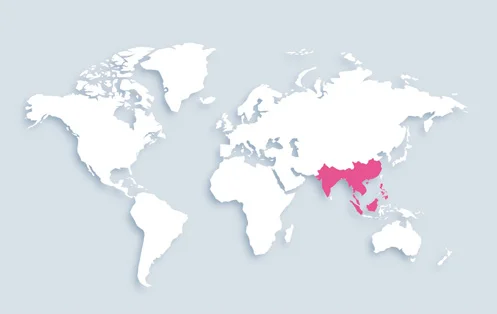
Indian Subcontinent to S. China and W. & Central Malesia