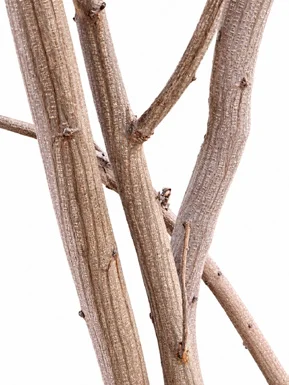
Bark
Smooth, greyish-green to light brown bark covering slender, woody, copiously-branched stems that are often coated in tiny, fine silver hairs.

Syn. Indigofera sumatrana
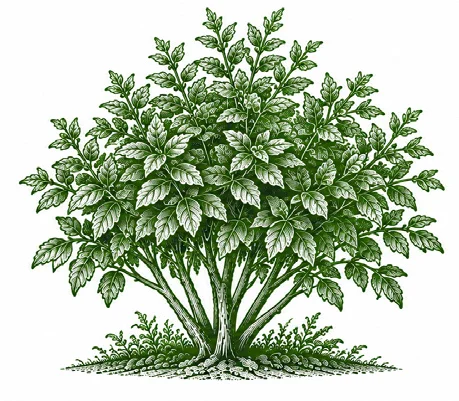
Smooth, greyish-green to light brown bark covering slender, woody, copiously-branched stems that are often coated in tiny, fine silver hairs.
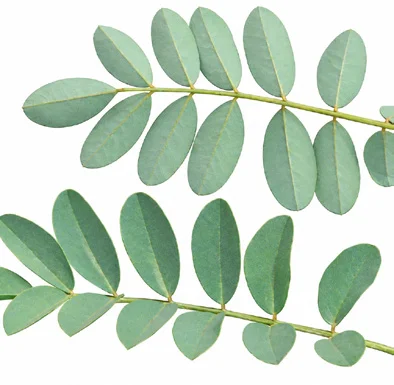
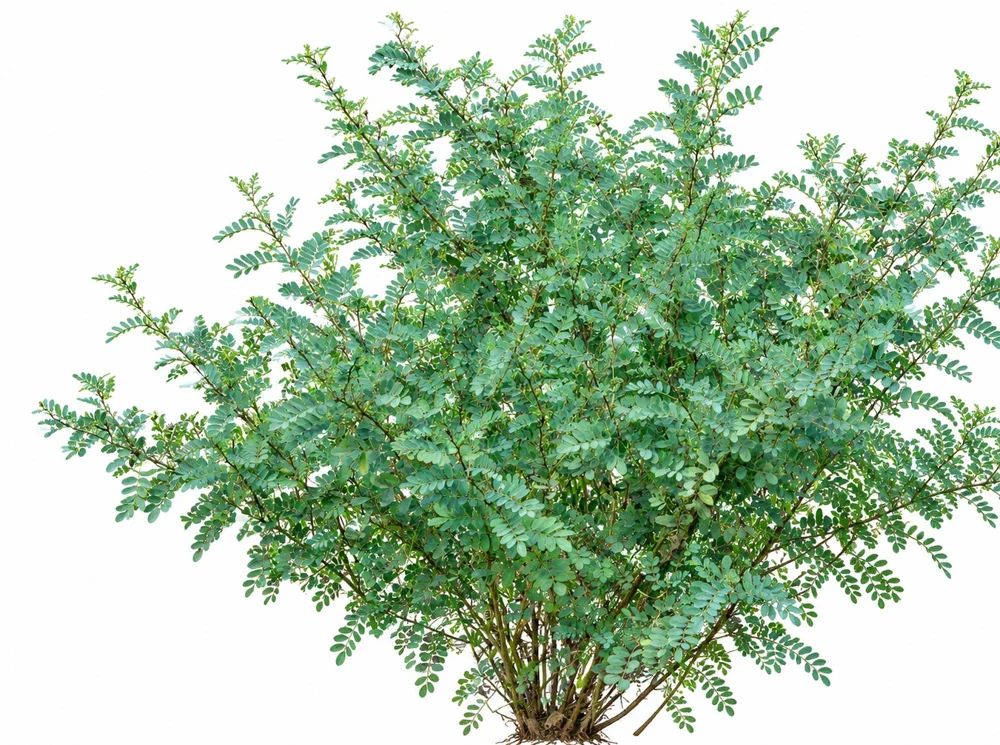
Pinnately compound leaves (5–10 cm long) composed of 9 to 13 oval, opposite leaflets that feature a smooth, pale-green undersurface.
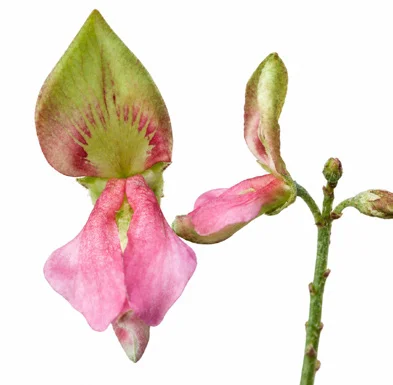
Small, butterfly-like pink or reddish-orange flowers clustered heavily along narrow, multi-flowered spikes (racemes) rising from the leaf axils.
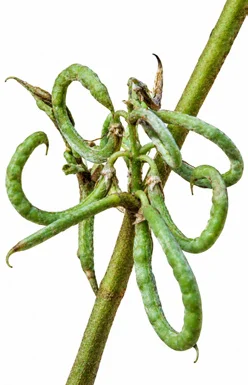
Slender, linear, cylindrical pods (2.5–3 cm long) that are sharply deflexed (pointing downwards), enclosing 5 to 12 tiny, cubic seeds.
Before synthetic dyes were developed, natural indigo was a valuable global commodity traded across major trade routes. Its dye and dyed textiles were prized for their rich blue colour and commercial value.
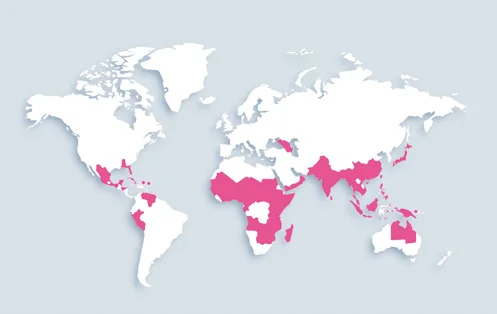
W. Tropical Africa, Tanzania to S. Africa, Indian Subcontinent to Indo-China