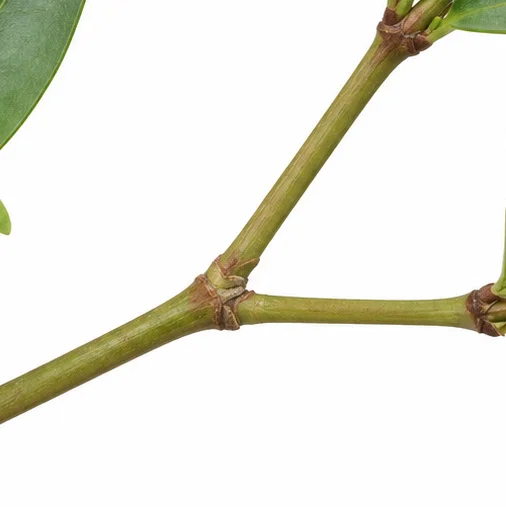
Bark
Young branches green and glabrous, becoming brown and woody with age.


Syn. Jasminum rigidum
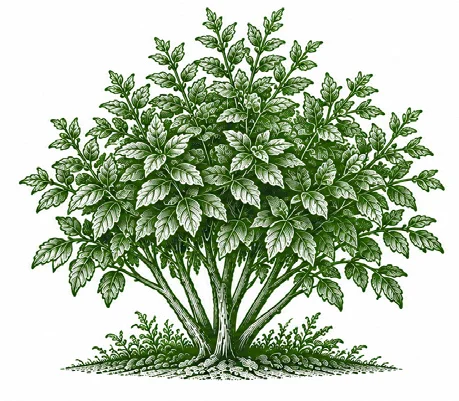
Young branches green and glabrous, becoming brown and woody with age.
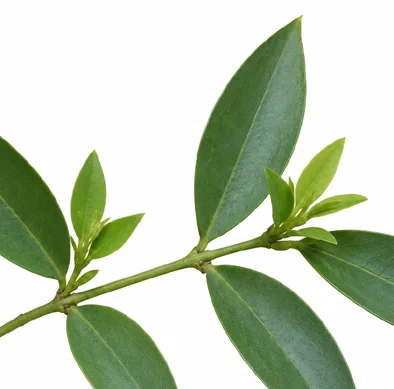
Leaves are 4–6 × 2–3 cm, lance-shaped, pointed at tip, round at base; nerves from the base and from midrib, distinct below; leaf-stalk 2–3 mm long.
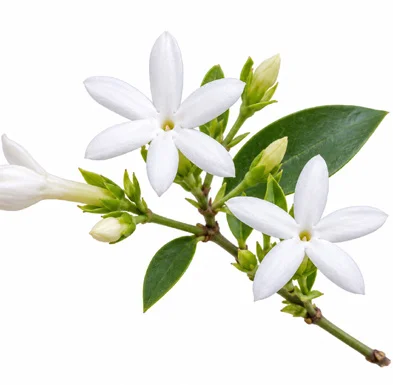
Borne in cymes at branch-ends or in leaf-axils, lax. Flower-cluster-stalks are 5–10 cm long, hairless; bracts 1–2 mm long, subulate, occur 3–5 together; flower-stalk 5 mm long, stout.
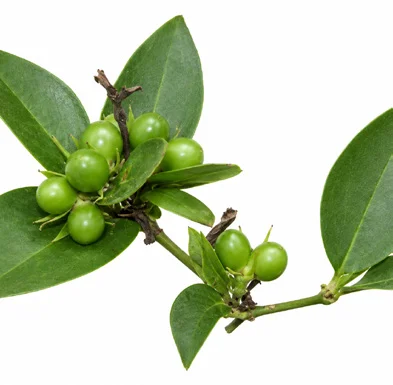
Berry is 8 × 7 mm, ovoid, hairless.
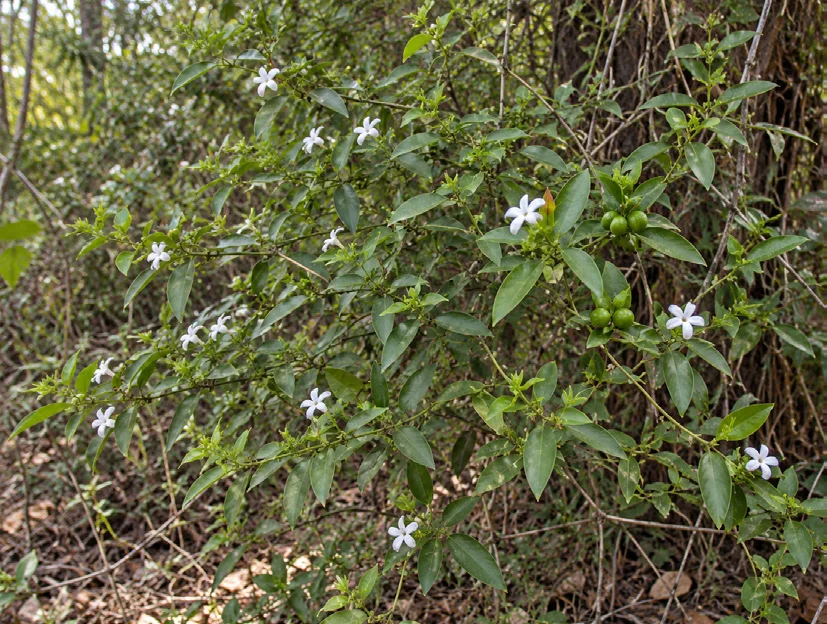
The species name cuspidatum comes from the Latin cuspis, meaning “pointed” or “spear tip,” referring to the sharply pointed tips of its glossy leaves. This feature is also reflected in the Tamil name Oosimalligai, where Oosi means “needle.”

S. India to Myanmar.