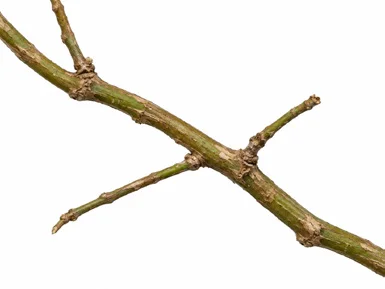
Bark
Woody stems are 4 cm thick. Slender branches are spreading and trailing.


Syn. Jasminum arborescens var. malabaricum
Woody stems are 4 cm thick. Slender branches are spreading and trailing.
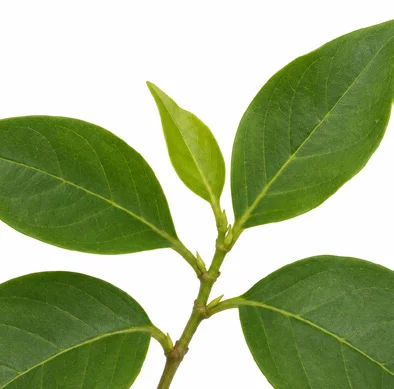
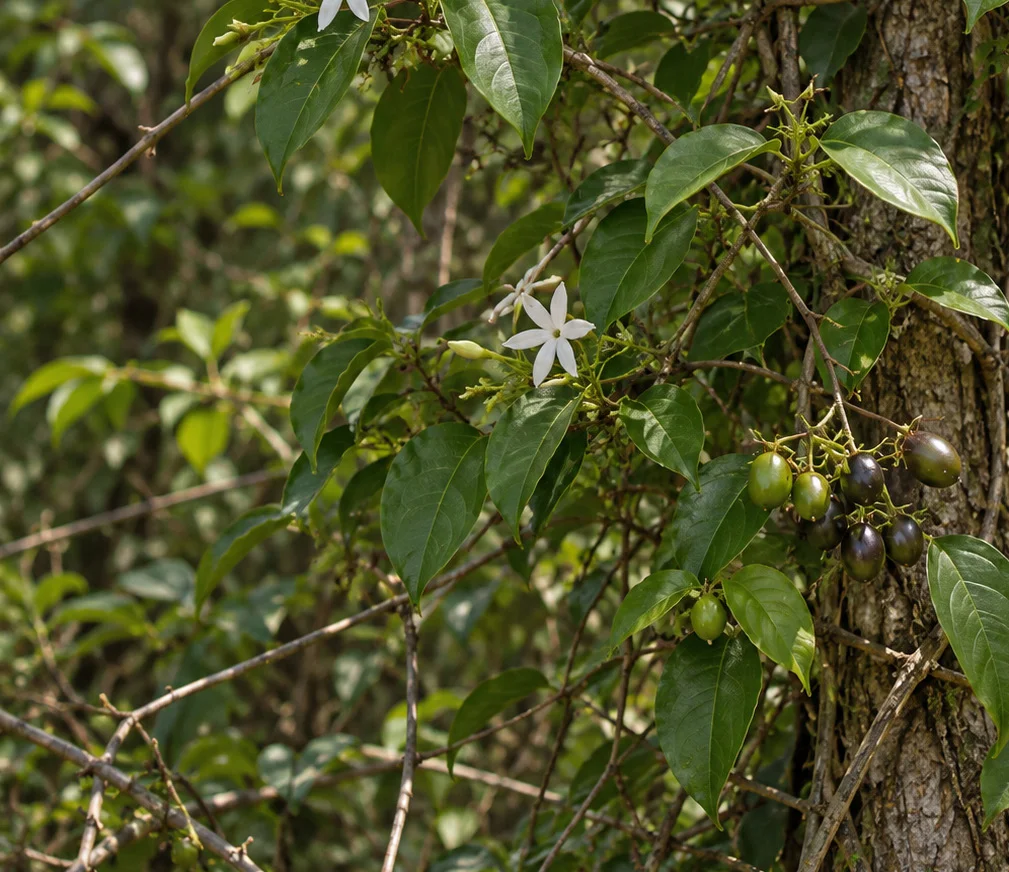
Oppositely arranged membranous leaves are 8–12 cm long, and broadly ovate, with a sharp tip. The base of the leaf is either rounded or heart-shaped, and the stalk is 1–3 cm long.
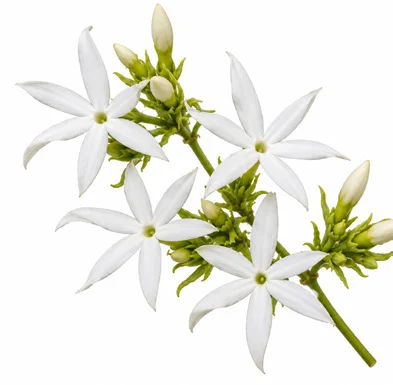
Fragrant white flowers appear in branched cymes at the end of branches, up to 50 in a single cyme. Petals are 6–10, 2 cm long, lance-like and spreading. The narrow tube below the petals is 2 cm long.
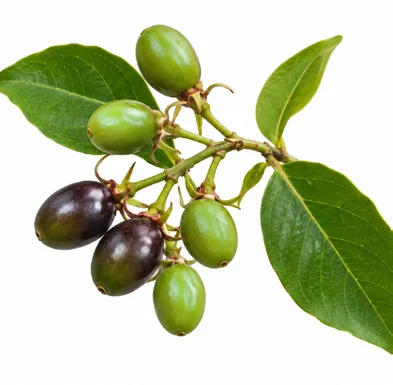
Fruit a paired berry (drupe-like), initially green and becoming purplish-black/black on maturity; usually containing one seed in each half.
Locally known as Ran Mogra or Kusar, this jasmine may resemble the familiar Mogra, but it is a distinct species with its own botanical identity.

S. India.