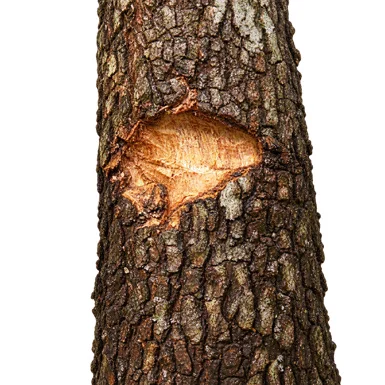
Bark
Light grey to brown, generally smooth; glutinous/sticky when fresh.

Syn. Litsea laurifolia
Light grey to brown, generally smooth; glutinous/sticky when fresh.
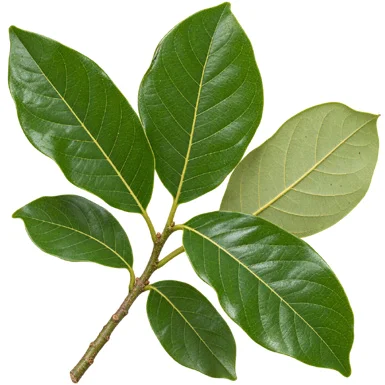
Alternate, elliptic, 7–15 × 3–7 cm, with grey-yellow, velvety petioles 1–2.6 cm long, young leaves velvety on both surfaces, and 5–12 pairs of lateral veins.
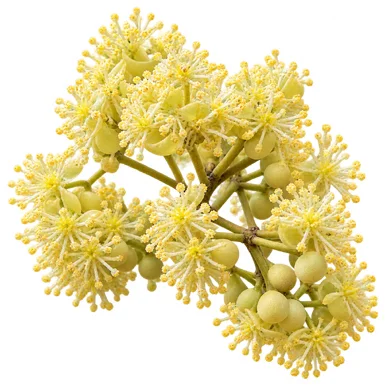
Yellow to whitish, arranged in few-flowered umbels on short branchlets; umbel stalks 1–1.5 cm long, male flowers with reduced or absent petals and usually 15 or more fertile stamens.
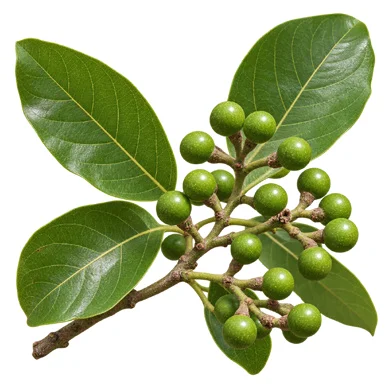
Fruit is round, 5-7 mm in diameter, fruit-stalk is 3-6 mm, slightly thickened at the top.
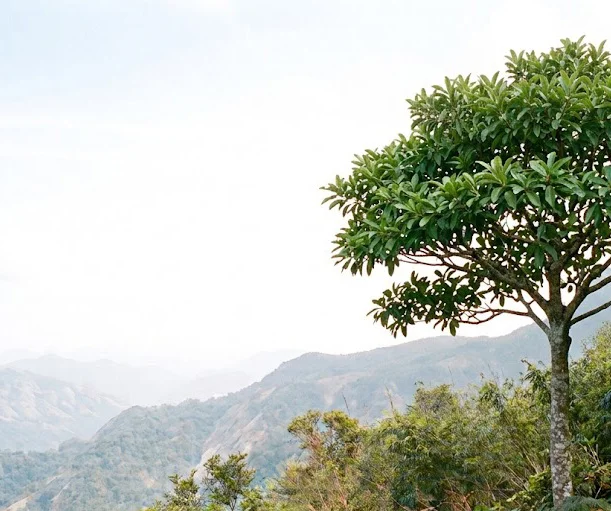
The mucilage-rich bark (Jigat) is dried, powdered and used to bind incense (agarbatti). In Central India, fresh bark paste is wrapped round fractured limbs as a splint.
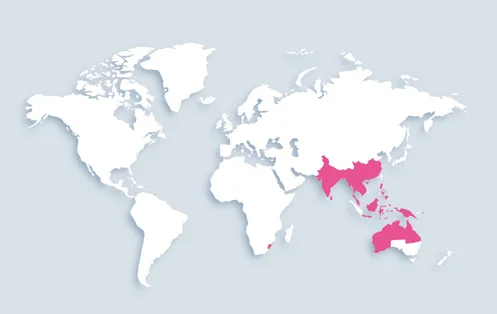
Tropical & Subtropical Asia, Comoros, New Caledonia