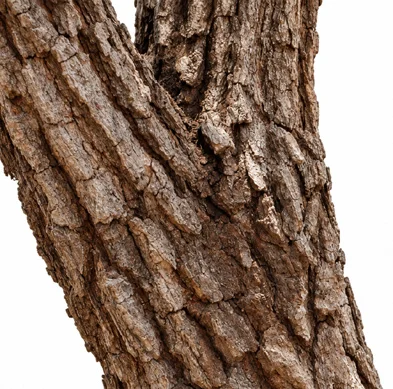
Bark
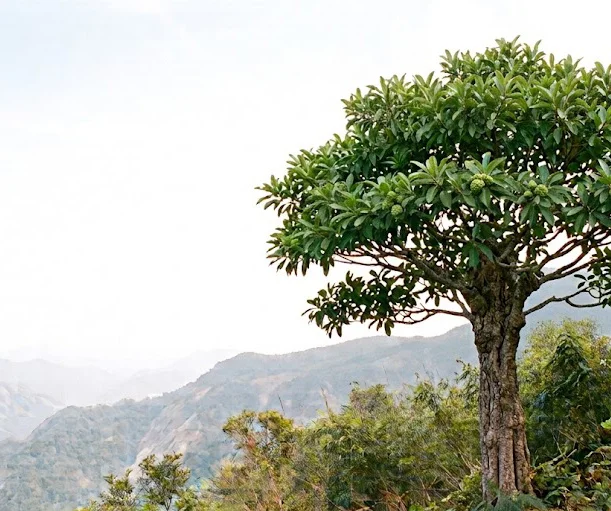
Stem is short and crooked, with rough bark with deep longitudinal cuts.


Syn. Morinda tinctoria
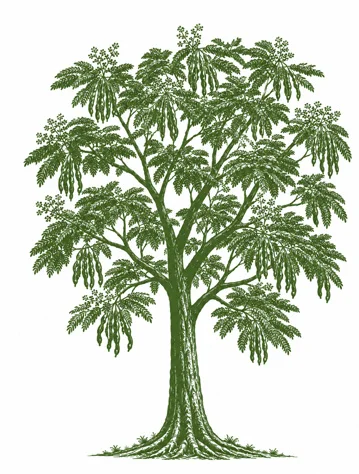
Stem is short and crooked, with rough bark with deep longitudinal cuts.
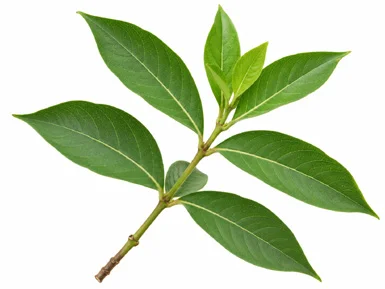
Oppositely arranged leaves are 15-25 cm long, oblong to lance-like.
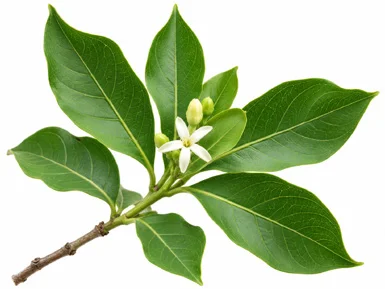
White, fragrant, tubular flowers, about 2 cm long, arranged in 3–5 cm-wide heads on 2–3 cm stalks, with 3–7 oblong petals and matching stamens.
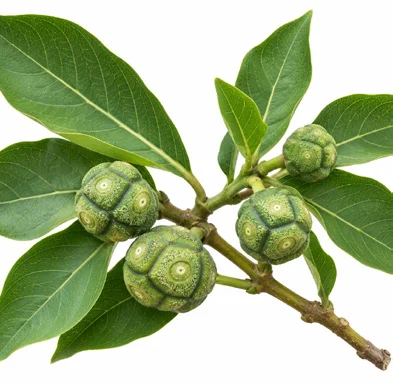
The fruit is a green syncarp, 2-2.5 cm diameter.
Root bark of Morinda pubescens yields Suranji, a natural dye traditionally used to colour cotton, silk and wool in red, brown and purple shades. Its yellow inner wood inspired the Malayalam and Tamil name Manjanathi, derived from manjal, meaning turmeric.

Indian Subcontinent to Indo-China, Jawa, Assam, Bangladesh, China, Taiwan, Thailand, Vietnam