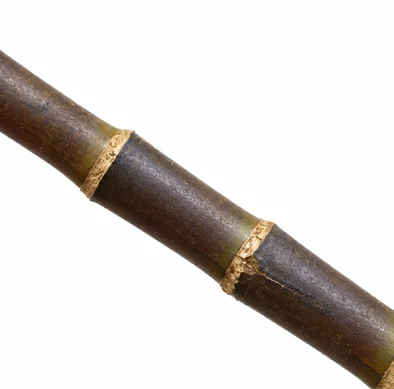
Bark
Slender green-to-yellow stems feature distinct, prominent rings called annular leaf scars.


Syn. Areca dicksonii
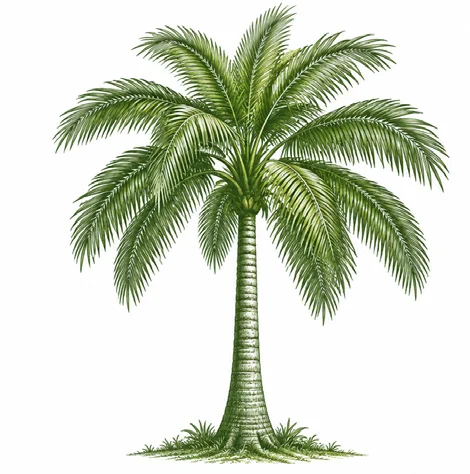
Slender green-to-yellow stems feature distinct, prominent rings called annular leaf scars.
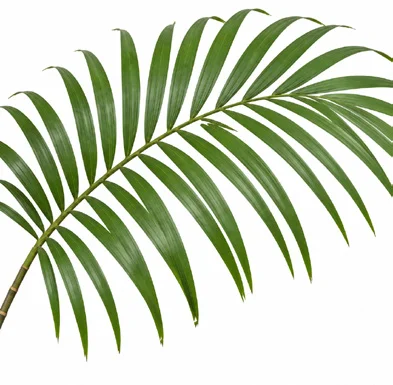
Compound, 1–1.3 m long, with 2–3 united leaflets measuring 30–50 × 2–3 cm and toothed margins; spadix axillary, 4–6-branched, deflexed and drooping below the crown.
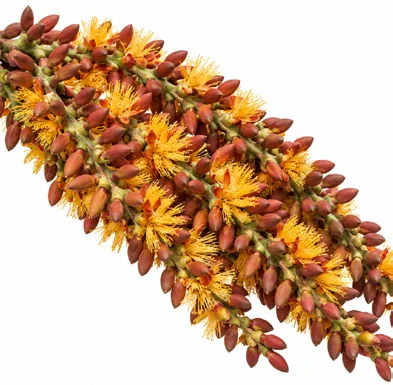
Unisexual, arranged in triads with a central female flower and two lateral males; male flowers have six stamens, while females possess six staminodes, a one-celled ovary and one ovule.
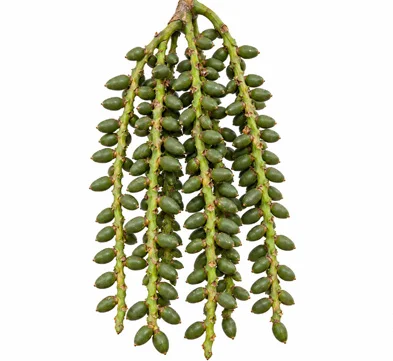
Fruits are 0.6-1 x 0.2-0.3 cm, ellipsoid; seed solitary, ellipsoid.

The species name dicksonii honours James Dickson, an 18th-century Scottish botanist and nurseryman associated with the early Royal Horticultural Society. Known as “Wild Betel Nut” or “Kadu Adike,” its hard, ruminate seeds are traditionally chewed as a substitute for commercial betel nut by forest communities of the Western Ghats.

Western Ghats, South and Central Sahyadris