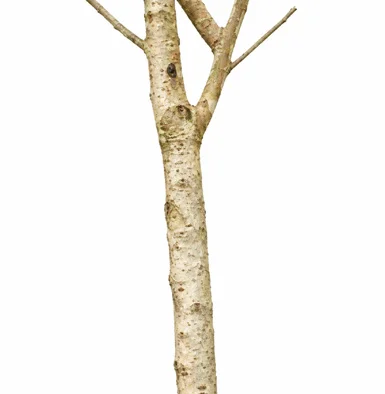
Bark
Bark grey to dark brown, rough, slightly fissured; inner bark reddish; young branches can be pubescent.


Syn. Pistacia oleosa
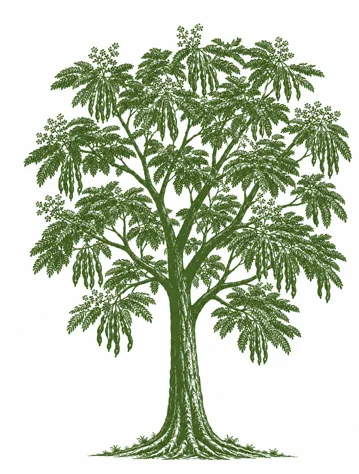
Bark grey to dark brown, rough, slightly fissured; inner bark reddish; young branches can be pubescent.
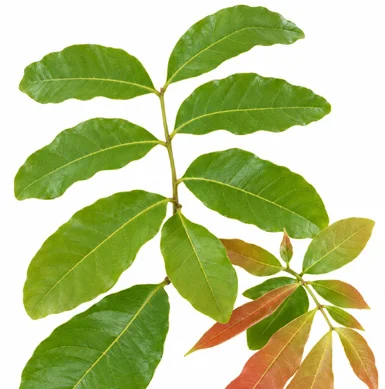
Leaves pinnate with 2–4 pairs of large leathery leaflets; leaflets oblong to elliptic; young leaves emerge red or coppery.
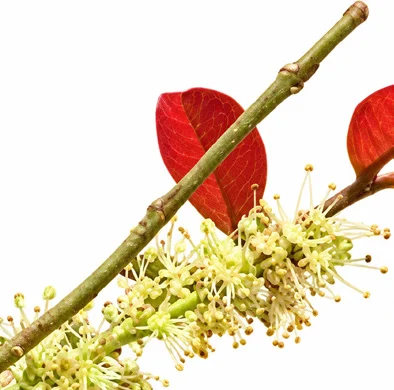
Small yellowish-green flowers in clusters (panicles) appearing on leafless branches during February– April; tree flushes new leaves after flowering.
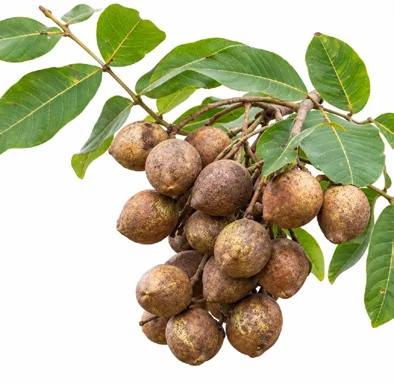
Ovoid to round 2–3 valved capsule; green turning yellowish-brown when ripe; splits to reveal seeds. Usually one to three large seeds enclosed in an orange-red fleshy aril; seeds rich in oil.
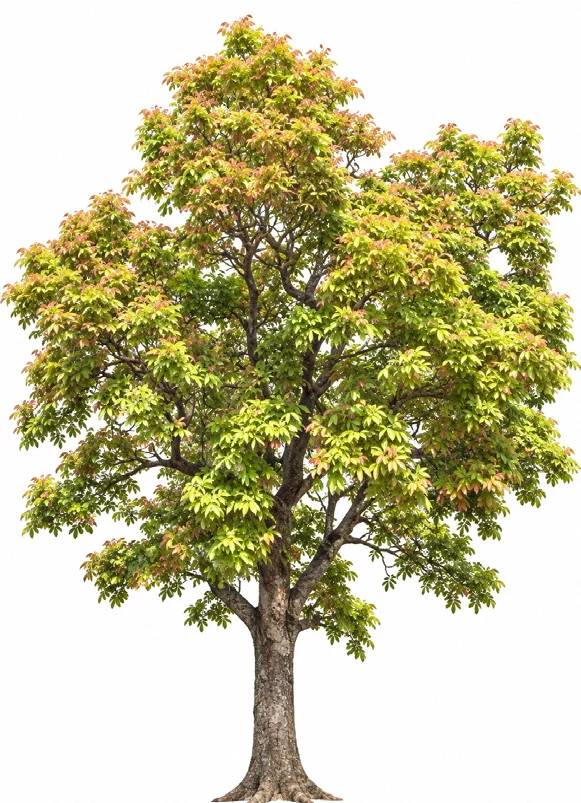
Known as kusum, it is an important host tree for lac insects, which produce the resin used to make shellac and related products. This tree is the absolute preferred host for the microscopic Kerria lacca insect.

Indian Subcontinent to Indo-China, Central & S. Malesia