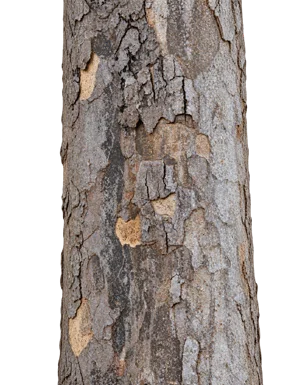
Bark
The grey bark is smooth, spotted with brown and faintly ridged.


Syn. Clompanus foetida
The grey bark is smooth, spotted with brown and faintly ridged.
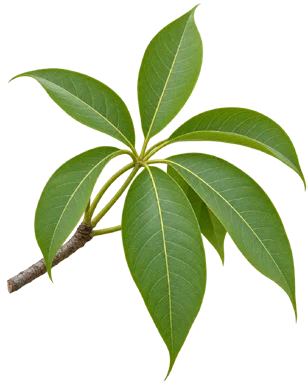
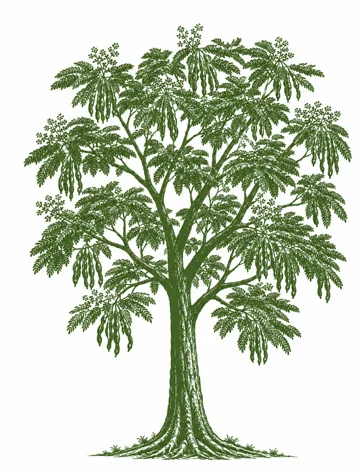
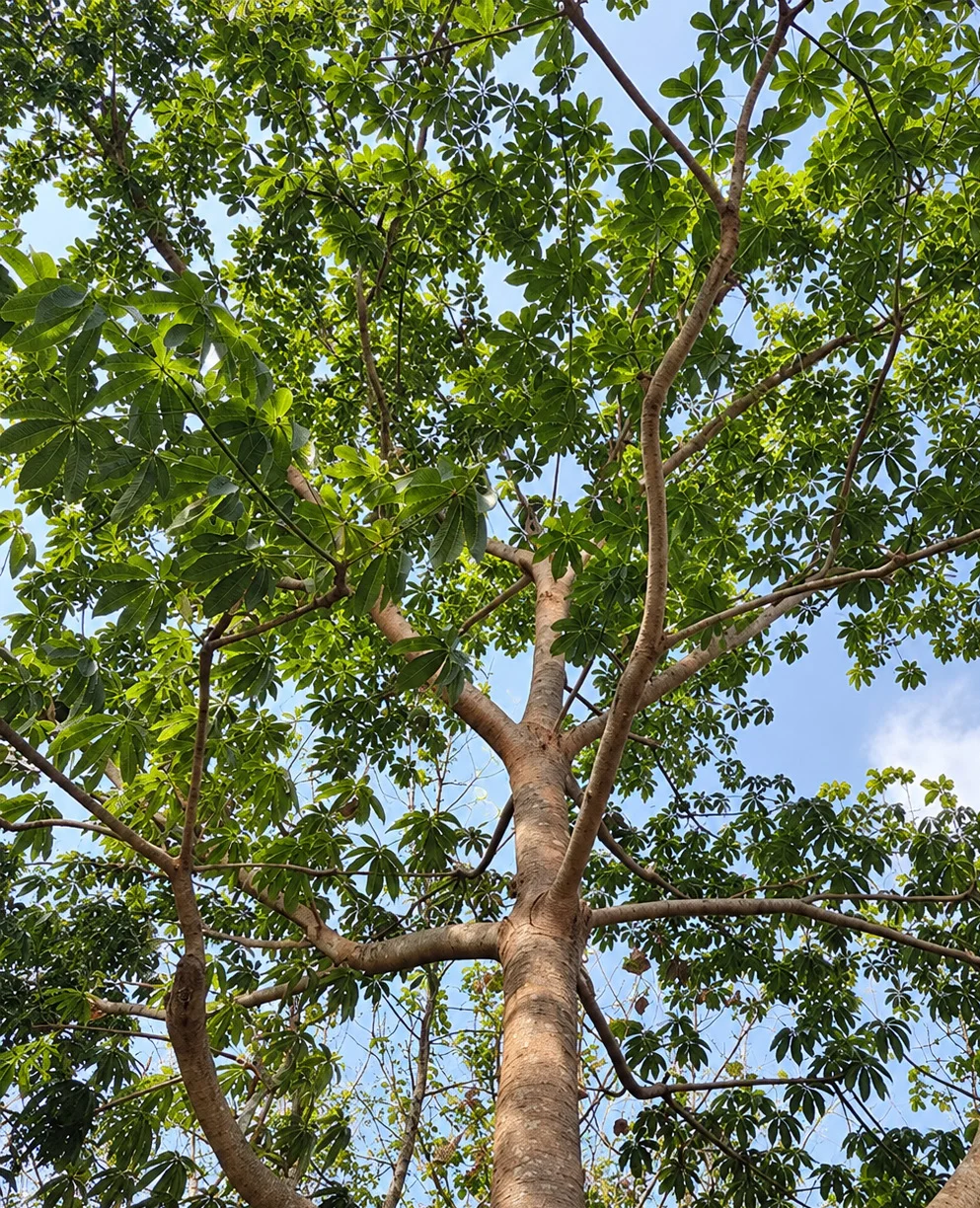
The branches are whorled and usually horizontal, the numerous branchlets gracefully up-curved and crowded at the ends with large, palm-like leaves, reminding one somewhat of the English Horse-chestnut.
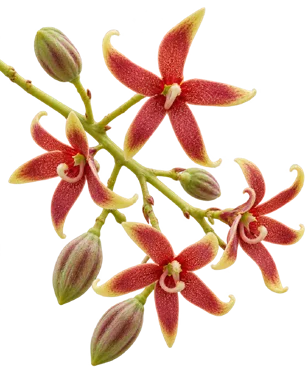
Reddish-green stems bear branched stalks ending in crimson-brown flowers; petal-like sepals, about 2.5 cm across, curl backward and vary from yellow to terracotta, crimson and brown. The smell of the flower is foul.
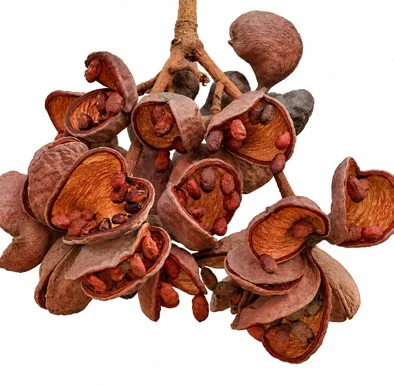
Aggregate of 1–5 woody follicles, scarlet when mature, boat-shaped and 5-lobed; each follicle contains several seeds.
Cut bark and soaked seed pods release mucilage traditionally boiled into durable, water-resistant adhesive for sealing wooden fishing boats and making paper fans.

Indian Subcontinent to W. & Central Malesia, China, Cuba, Pakistan